
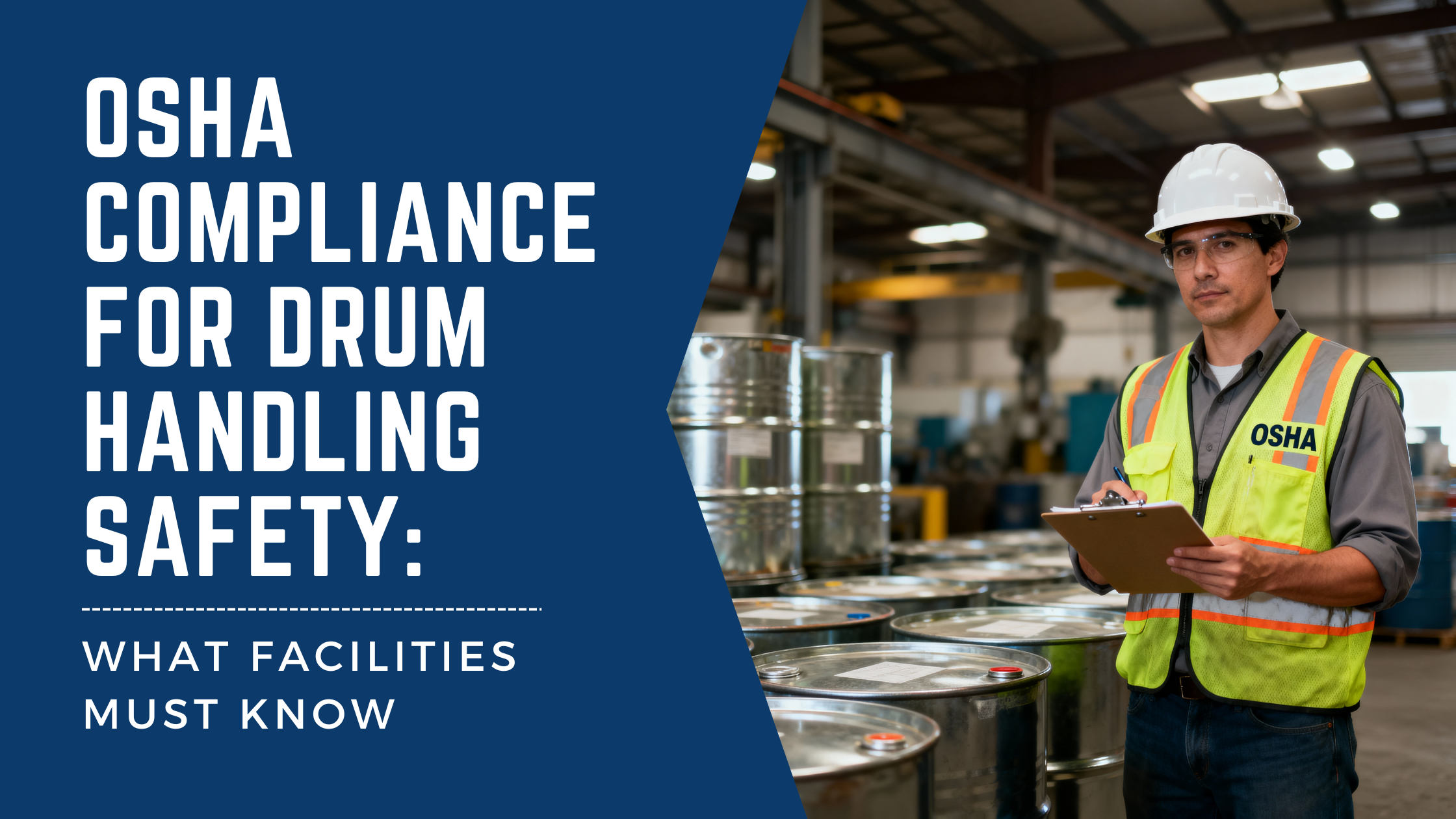
Learn the most important OSHA regulations for drum handling and how to document a compliant program.
OSHA Compliance for Drum Handling Safety: What Facilities Must Know
Key OSHA standards for drum handling safety
OSHA (Occupational Safety and Health Administration) provides specific standards for drum handling safety – including the safe handling, storage, and movement of drums in industrial settings. Compliance not only reduces risk of employee injury but also protects companies from costly violations and legal consequences. Key OSHA guidelines address issues such as required use of PPE, restrictions on manual handling, safe stacking and storage, equipment specifications for powered handlers, spill containment, and proper signage. Employers must assess risks associated with specific drum types—especially those containing hazardous chemicals. Regular safety audits and use of OSHA-compliant gear, from steel-toed footwear to crash-resistant racking, are nonnegotiable. Understanding how federal, state, and industry standards intersect allows facility managers to build a robust, tailored compliance program. Learn about OSHA drum handling safety.
Documenting safety procedures and required employee training
OSHA compliance encompasses both written documentation and hands-on employee training. Every facility should have up-to-date safety policies specifically addressing drum handling, including lifting methods, required PPE, spill response, and lockout/tagout practices when dealing with hazardous materials. Training must be conducted for all employees—in new hire orientation and as regular refreshers—covering not just procedures, but also hazard recognition and injury prevention. Documentation should include all records of training, near misses, incident reports, equipment inspections, and remedial actions. Regular drills on emergency response to spills or accidents ensure readiness and fulfill regulatory requirements. Compliance officers should establish clear record-keeping protocols, updated as regulations and equipment evolve.
Continuous improvement and inspection for regulatory compliance
To maintain compliance over time, facilities must embrace a culture of continuous improvement. This begins with routine inspections, regular review of incident and training logs, and willingness to update policies as best practices and regulations change. Involving employees in safety committee meetings or compliance reviews encourages participation and builds accountability. Partnering with experienced vendors and consulting current OSHA publications helps managers interpret new standards and adapt procedures accordingly. Industry benchmarking and leveraging technology—like audit management software or digital inspection checklists—make ongoing compliance sustainable and auditable. Remember, compliance is not just about avoiding penalties; it’s a key pillar of workplace safety and operational excellence. Access OSHA’s official safety guide.



No responses yet