

Know Your Drum: Why Drum Type Matters for Safe Handling
Not all drums are created equal — and assuming they are, can create serious safety risks.
Before selecting drum handling equipment, it’s critical to understand exactly what type of drum you’re working with. Steel, plastic, fiber, open head, tight head, ribbed, smooth wall, rimmed, rimless — each presents unique handling considerations that directly impact safety, stability, and equipment configuration.
Drum Material Matters
Steel Drums
Traditional 55-gallon steel drums are strong and rigid, often with rolling hoops and a defined top rim. Many drum handling attachments are designed specifically to engage that rim for lifting, tilting, or pouring.
Plastic Drums
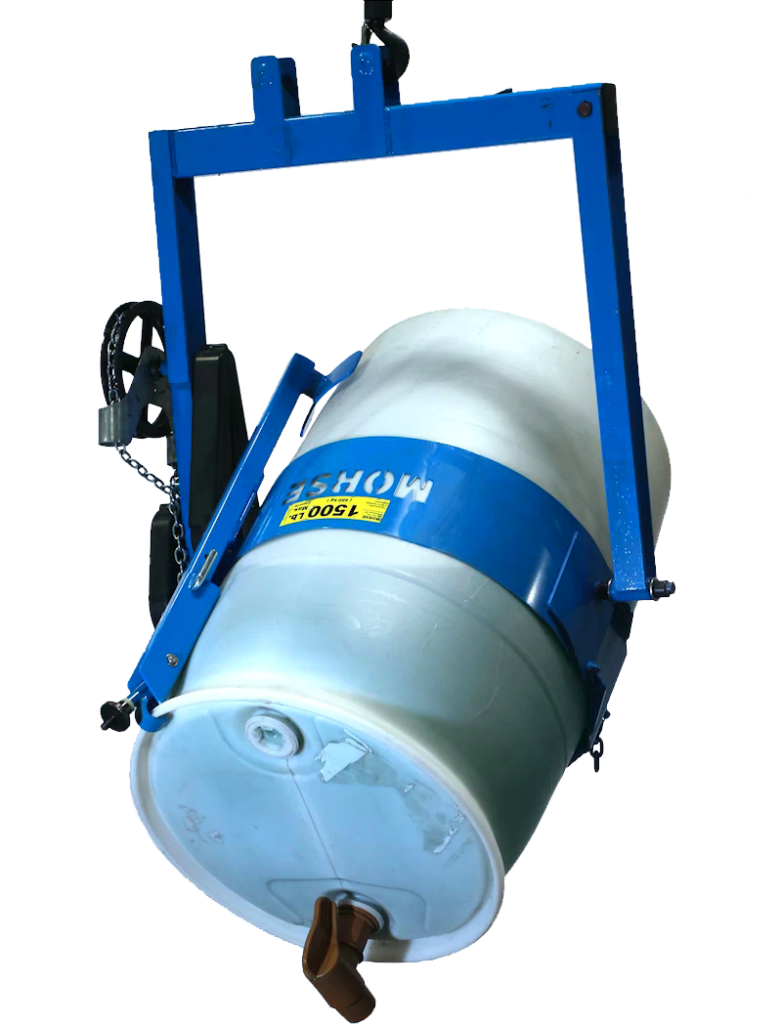
Plastic drums can vary in wall thickness and rigidity. Some have molded ribs; others have smooth sides. Without the same structural strength as steel, clamping pressure and lift points must be properly matched to avoid deformation or slippage.
Fiber Drums
Fiber drums are commonly used for dry materials. They require careful consideration when gripping or tilting, especially if they lack a reinforced top rim.

Rimmed vs. Rimless Drums
Many drum handling devices rely on the top rim for secure engagement. Rimless or straight-sided drums may require specialized attachments or add-ons to ensure a safe lift.
Using equipment configured for a rimmed steel drum on a rimless plastic drum, for example, can compromise stability and increase the risk of shifting or dropping.
Capacity Ratings Aren’t One-Size-Fits-All
Capacity ratings are based on specific conditions. Drum material, weight distribution, and attachment configuration all play a role.
A piece of equipment rated for a certain weight with a steel drum may require different considerations when used with a plastic or fiber drum. Understanding those differences is essential for safe operation.
When Add-Ons Are Necessary
Certain drum types require drum-specific components or accessory kits to ensure proper engagement and load control. These add-ons are not optional upgrades — they are often critical to maintaining safe operation and preserving equipment integrity.
The safest lift starts with asking the right questions:
- What material is the drum?
- Does it have a top rim?
- What does it weigh when full?
- Will it be lifted, tilted, poured, or transported?
Safety Starts Before the Lift
One of the most common safety gaps in manufacturing happens when drum type is overlooked. The assumption that “a drum is a drum” can lead to improper equipment selection, instability, and preventable incidents.
Knowing how drums are not handled safely is often the first step toward improving safety practices.
The right equipment starts with the right information.
If you’re unsure about the type of drum in your application or whether additional components are required, consult with a qualified drum handling equipment specialist before operating.
Because safe drum handling isn’t just about capacity — it’s about compatibility.



No responses yet