
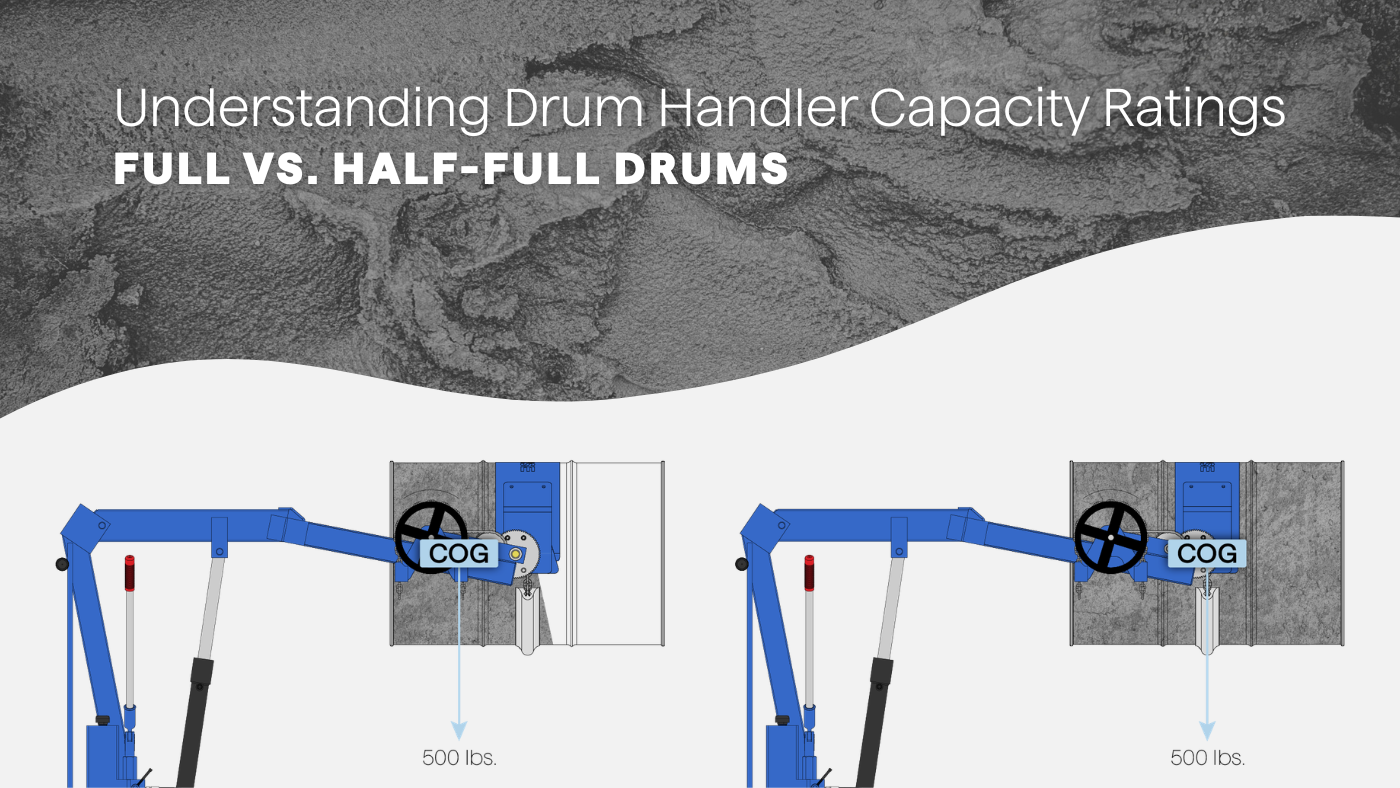
Understanding Drum Handler Capacity Ratings: Full vs. Half-Full Drums
When reviewing Morse equipment specifications, you may notice two different drum handler capacity ratings listed: one for a full drum and one for a half-full drum. At first glance, this can be confusing. Why would the same unit have two different weight ratings? The answer comes down to two key factors: structural capacity and torque requirements—and ultimately, safety.
Full Drum Capacity: Structural Strength
The full drum rating reflects the overall structural capacity of the unit—the maximum load the frame, weldments, and components can safely support.
When a drum is completely full, the contents are more stable. There is minimal internal movement, and the center of gravity (COG) is generally aligned close to the drive shaft during rotation. Because the load behaves more predictably, the unit can safely handle its maximum rated structural load.
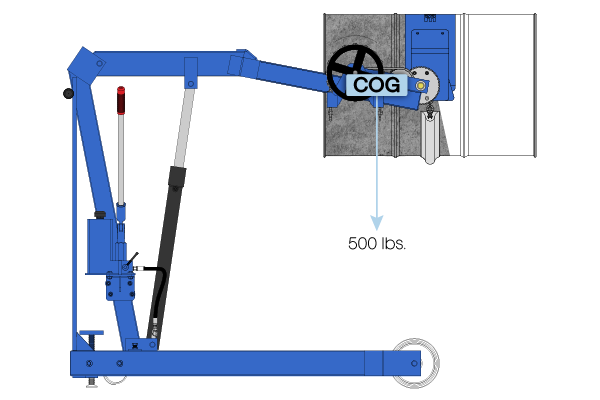
Half-Full Capacity: Powertrain Strength and Torque
The half-full rating is different. It reflects the strength of the powertrain and the torque required to rotate the drum.
A partially filled drum creates a more demanding rotational load. As the drum turns, the contents can shift suddenly—commonly referred to as the sloshing effect. This shifting load moves the center of gravity away from the drive shaft and increases the torque required to rotate the drum.
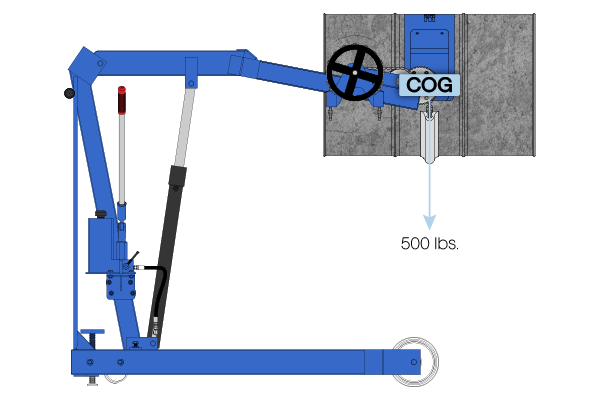
In some cases, the material may not shift at all. For example, a half-full drum of a highly viscous product—like peanut butter—can behave almost like a solid mass. When the contents do not move during rotation, even greater torque is required to initiate and maintain turning. This is a key reason Morse introduced a separate half-full capacity rating.
Center of Gravity and Load Behavior
As a drum is tilted for pouring, the center of gravity changes position. With a full drum, this shift is gradual and predictable.
With a half-full drum, the movement can be more dynamic. However, if the product flows toward the top of the drum during pouring, the COG can shift upward in a way that actually reduces torque requirements as rotation continues.
While a violent sloshing effect can impact stability—particularly on mobile units such as the 400 Series—Morse equipment is designed to rotate at a controlled, slow pouring speed. This minimizes sudden load shifts during normal operation.
Why Listing Both Ratings Matters
Listing separate ratings for full and half-full drums:
- Reflects real-world handling conditions
- Accounts for both structural strength and rotational torque
- Helps ensure safe operation
- Supports proper equipment selection
It’s not just about how much a drum weighs—it’s about how the load behaves during lifting, tilting, and pouring.
Understanding that difference helps protect your employees, your product, and your equipment.



No responses yet