
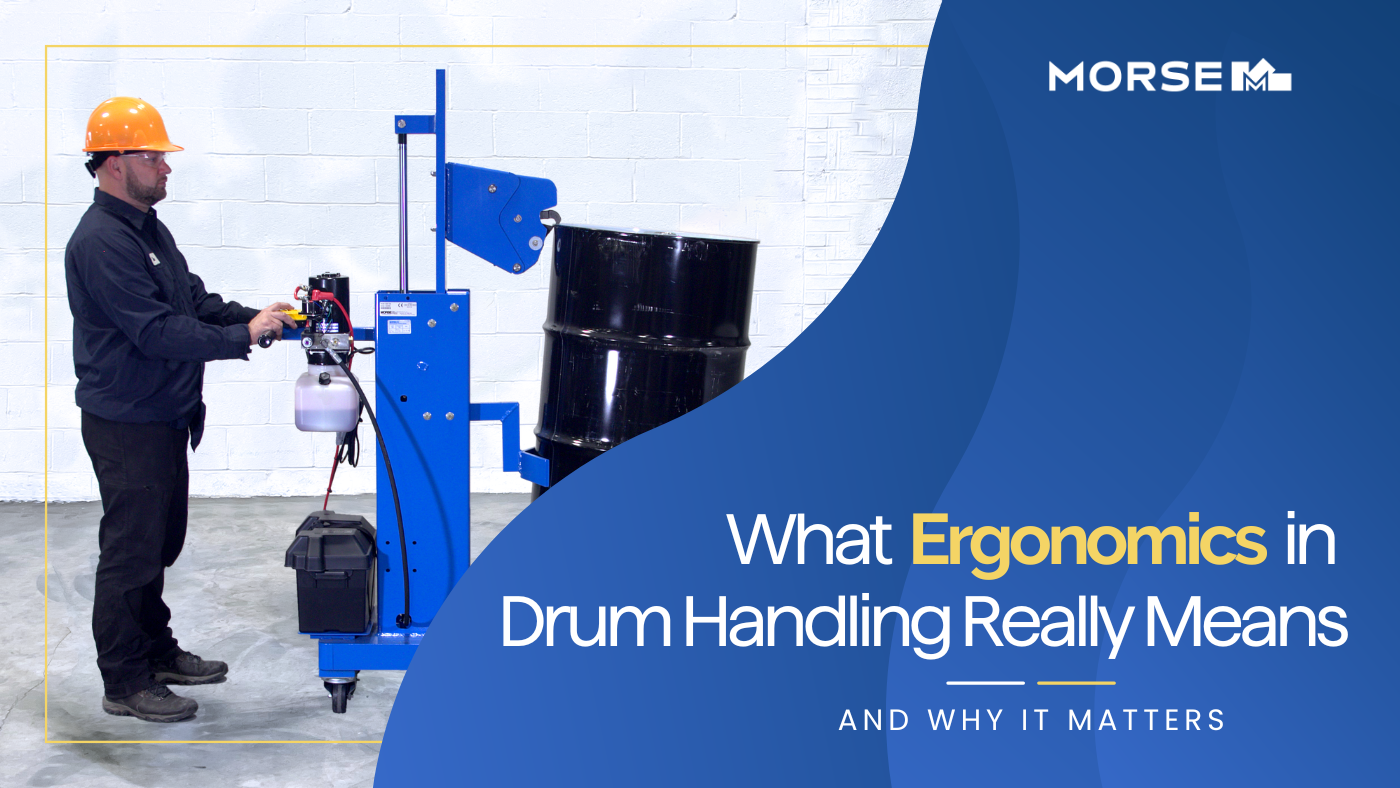
What Ergonomics in Drum Handling Really Means—And Why It Matters
Ergonomics isn’t just a workplace buzzword—especially when it comes to drum handling. In facilities that regularly work with 55-gallon drums, ergonomics plays a critical role in safety, productivity, injury prevention, and long-term operational efficiency.
Understanding what ergonomic drum handling really means helps teams reduce risk, improve consistency, and make smarter equipment decisions on the plant floor.
What Is Ergonomic Drum Handling?
Ergonomic drum handling refers to the use of equipment and processes designed to reduce physical strain, awkward movement, and injury risk when lifting, moving, rotating, or dispensing drums.
Rather than forcing workers to adapt to heavy loads or unsafe motions, ergonomic solutions are designed to fit the worker.
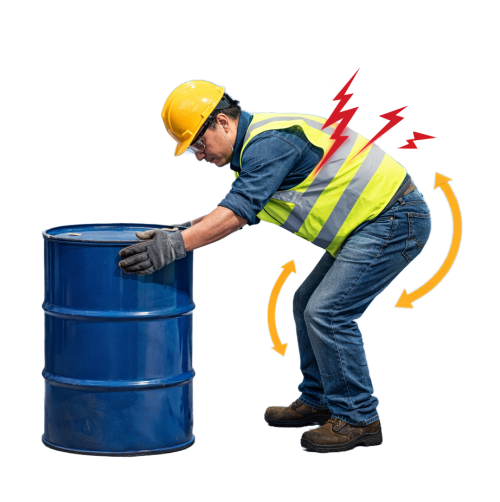
With steel drums weighing up to 600 lbs. or more, manual handling creates unnecessary risk. Without proper equipment, employees are often forced into bending, reaching, twisting, or lifting motions that strain the back, shoulders, and wrists—leading causes of musculoskeletal injuries cited by OSHA.
What True Ergonomics Eliminates in Drum Handling
Properly designed ergonomic drum handling solutions help eliminate:
- Excessive bending and reaching
- Manual lifting or tipping of heavy drums
- Awkward body positions during rotation or pouring
- Repetitive strain from pushing, pulling, or maneuvering drums
By removing these stress points, facilities can significantly reduce injury risk while improving efficiency.
Common Risks When Handling Drums
Many facilities still rely on manual or improvised methods, such as:
- Leaning drums onto pallets
- Tilting drums to dispense contents
- Rotating drums by hand to access bungs
- Moving drums across uneven surfaces
These tasks create high-risk lift zones and repetitive stress—two of the most common contributors to workplace injuries and lost-time incidents.
How Ergonomic Drum Handling Equipment Improves Operations
Purpose-built drum handling equipment allows workers to operate safely, consistently, and with greater control. Solutions such as mobile drum handlers, powered drum rotators, below-hook drum carriers, and drum palletizers are designed to support proper posture and predictable movement.
Key benefits include:
- Lower injury rates and workers’ compensation costs
- Reduced downtime and fatigue
- Faster, smoother drum handling processes
- Less product loss through controlled pouring and movement
- Greater employee confidence and job satisfaction
Ergonomic equipment doesn’t just protect workers—it improves overall workflow and reliability.
What Makes Drum Handling Equipment Truly Ergonomic?
When evaluating drum handling solutions, look for equipment that:
- Eliminates the need for manual lifting
- Supports drums during rotation and dispensing
- Reduces push and pull forces
- Keeps workers upright, stable, and in control
- Integrates seamlessly into existing workflows
The right ergonomic solution should enhance safety without slowing operations down.
Ergonomics Is a Proactive Safety Strategy
Prioritizing ergonomic drum handling equipment isn’t just about injury prevention—it’s about building a safer, more efficient operation that can scale and adapt over time.
When workers are protected and processes are consistent, facilities are better positioned for long-term growth, compliance, and productivity.



No responses yet