
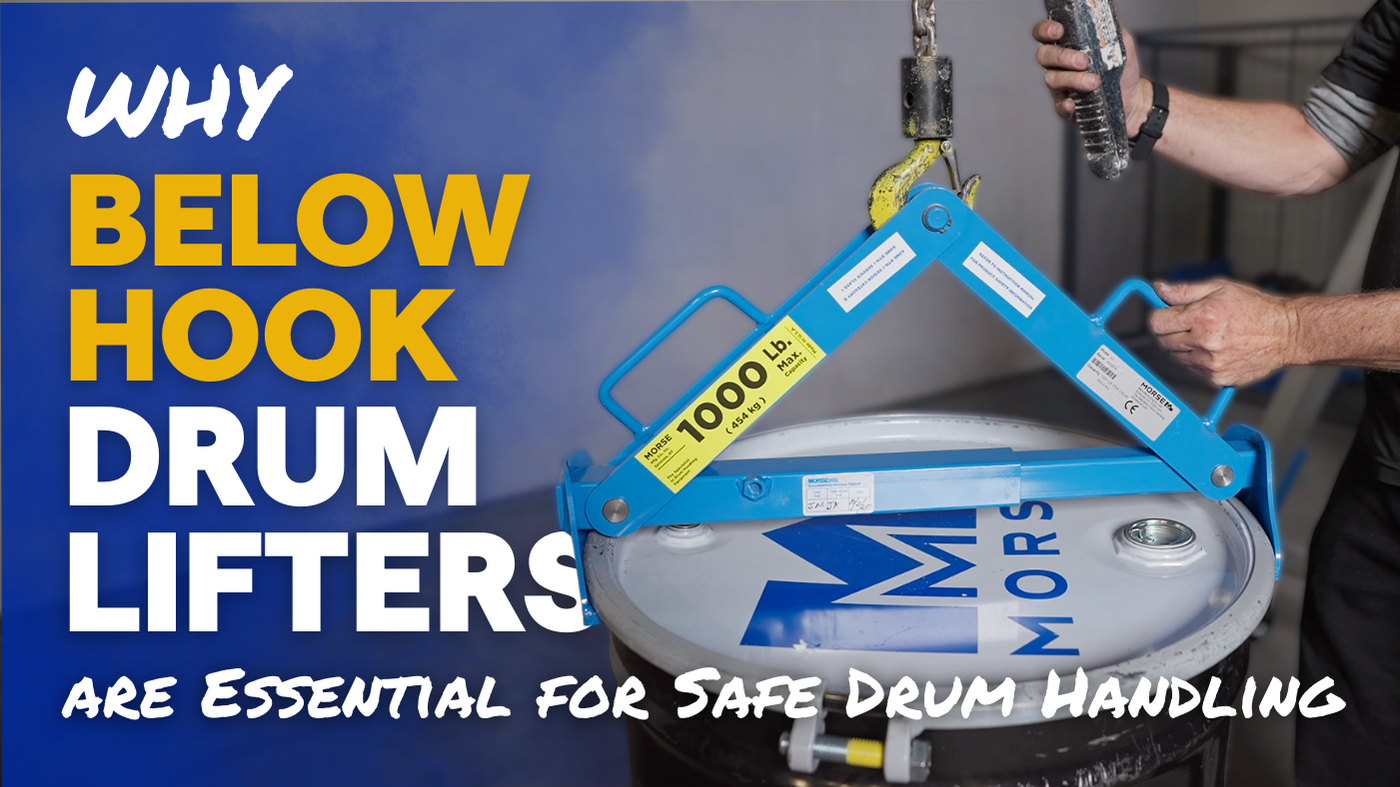
Why Below-Hook Drum Lifters Are Essential for Safe Drum Handling
When it comes to lifting and moving heavy drums, not all solutions are created equal. Below-hook drum lifters — designed to attach under the rim of a drum and connect with a hoist, crane, or monorail — provide a safe, controlled method to lift upright drums without manual strain. These devices are especially valuable in industrial settings where efficiency and safety are top priorities.
What “Below-Hook” Means
Below-hook drum lifters are hoist attachments that grab the drum from beneath the top rim or around the barrel, allowing a crane or hoist to pick it up vertically. This design keeps the drum stable, secures it under load, and prevents tipping or slipping during lift and placement.
Key Advantages of Below-Hook Drum Lifters
1. Enhanced Safety & Compliance
Below-hook lifters are engineered to meet ANSI/ASME B30.20 standards for below-the-hook lifting devices — including safety factors, structural integrity, and load identification — helping ensure safe operation when lifting drums with a crane or hoist.
They eliminate manual lifting and awkward body positioning, significantly reducing the risk of injuries. The secure grip also minimizes accidental drops or spills.
2. Secure Grip & Controlled Lifting
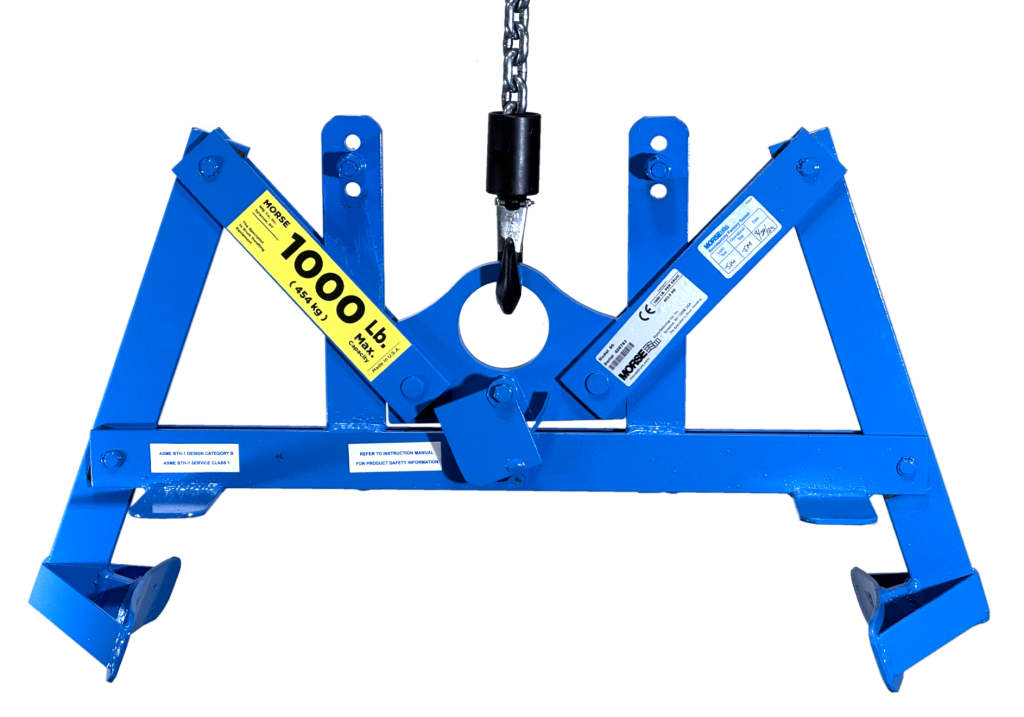
These lifters utilize tongs, under-drum support, web straps, or remote mechanisms to securely grip the drum beneath the rim. Whether you’re lifting standard 55-gallon steel drums or fiber/plastic drums, the below-hook design ensures the load stays balanced.
3. Versatility Across Drum Types
Below-hook styles include:
- Web strap support models that secure drums upright with a positive grip.
- Remote-release Verti-Karrier models that make loading/unloading easier in tight spaces.
- Horizontal-lifting hooks for special applications.
This variety helps facilities handle different drum sizes and materials — steel, plastic, or fiber — with one lifting system.
Common Types of Below-Hook Drum Lifters
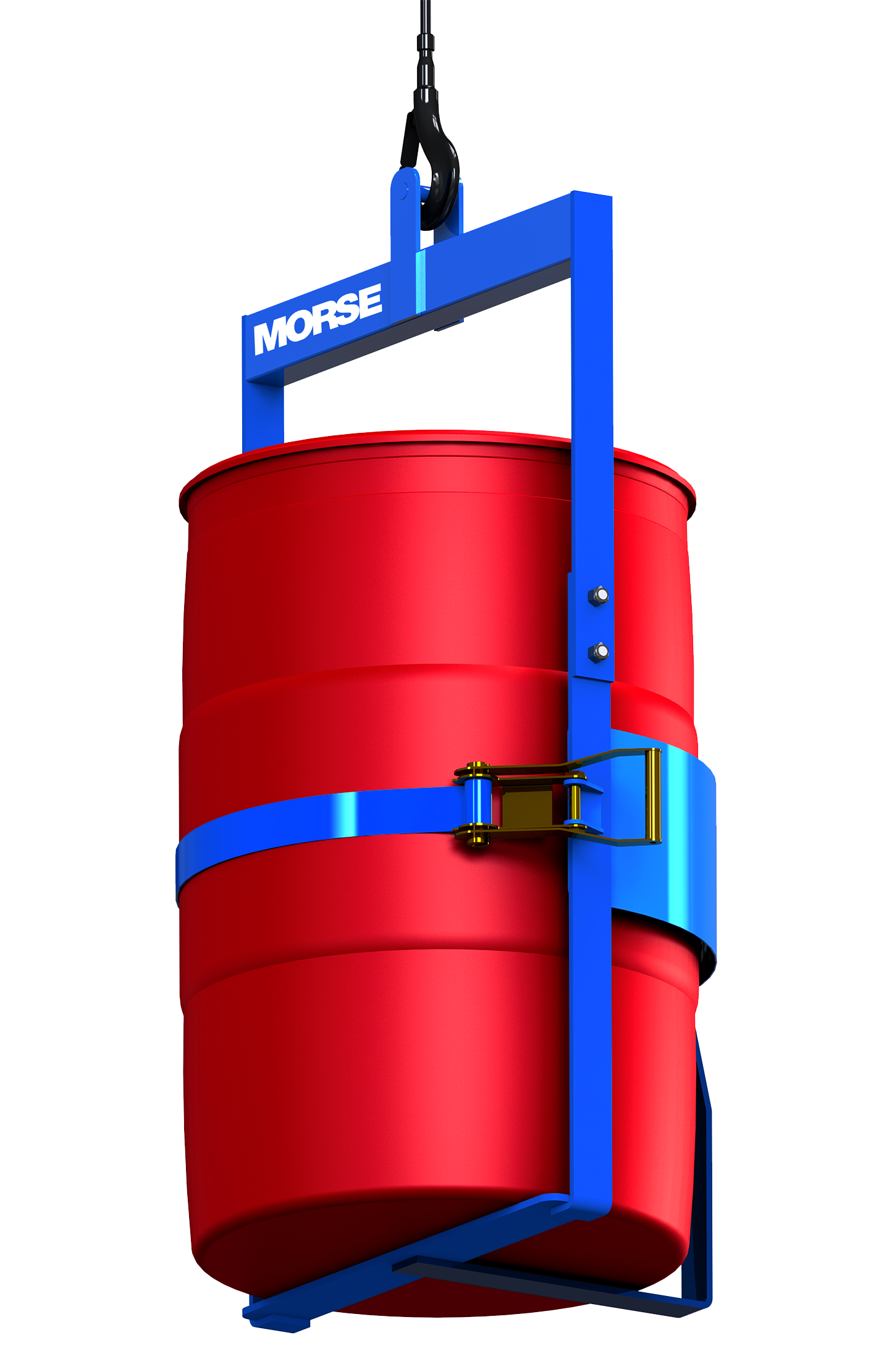
Below-hook drum lifters are available in several configurations to support different handling needs while keeping drums upright and secure during lifting.
Under-Drum Support Lifters
These designs cradle the bottom of the drum while lifting from below the top rim. They’re ideal for stable, upright handling when moving drums between pallets, scales, or workstations.
Rim-Grip Drum Lifters
Rim-grip models engage the drum to lift rimmed steel, fiber, or plastic drums. This style is commonly used where quick attachment and release are needed.
Remote-Release Drum Lifters
Remote-operated lifters allow operators to attach or release the drum from a distance, reducing the need to work directly beneath the load—especially helpful in high-reach or confined applications.
Specialty & Environment-Specific Designs
Some below-hook lifters are built for specific conditions, such as stainless steel models for washdown or corrosive environments, or designs sized for overpack and salvage drums.
Tips for Choosing the Right Below-Hook Lifter
- Drum Size & Material: Confirm diameter, height, and material to ensure compatibility.
- Lift Method: Choose a model with remote control or tilt if frequent repositioning is needed.
- Application Environment: For corrosive or sanitary spaces, stainless models are best.
Bottom Line
Below-hook drum lifters are a smart investment for operations that routinely handle drums — they bring safer lifting, better control, and less downtime than manual methods. And with models available for a wide range of drum types and conditions, there’s a below-hook lifter to fit nearly every facility’s needs.



No responses yet