
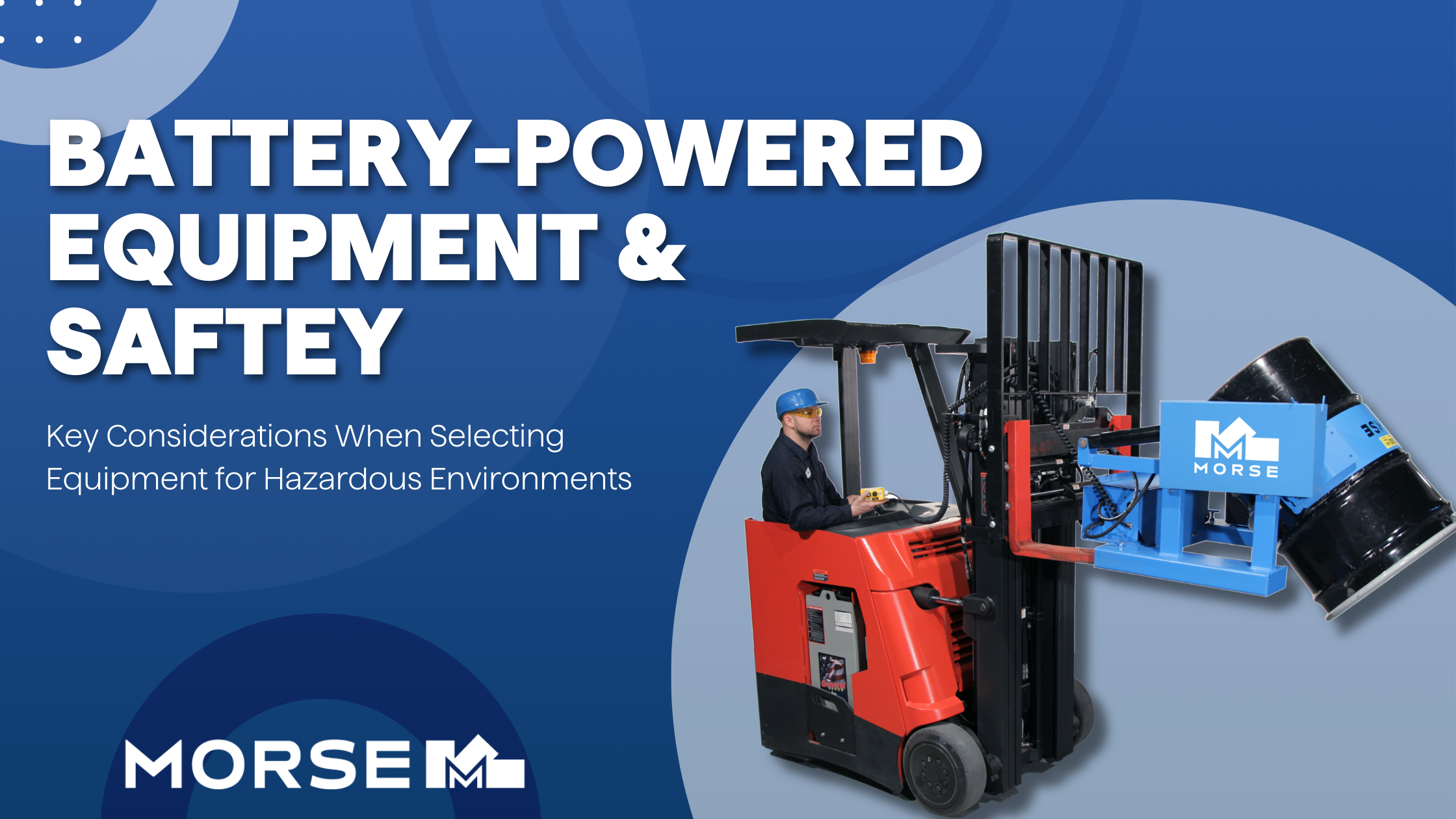
Battery‑Powered Drum Handling Equipment Safety: What Material Handling Teams Must Know
Battery‑powered equipment has become increasingly common in industrial, warehouse, and manufacturing environments. Its mobility, ergonomic benefits, and ease of use make it ideal for lifting, transporting, and positioning drums. For many facilities, battery‑powered drum handling equipment helps streamline workflow and reduce operator fatigue.
However, even the most advanced battery‑powered units have strict safety limitations—especially regarding hazardous (classified) locations. Understanding these limitations is essential for OSHA compliance, equipment selection, and safe material handling practices.
This guide answers the most common questions about battery‑powered drum handlers, clarifies how Morse Manufacturing designs its equipment for safe use, and outlines key considerations for maintaining battery safety in industrial environments.
Quick Summary
Battery‑powered drum handling equipment improves efficiency and ergonomics in non‑hazardous industrial environments. Morse battery‑powered units are not EE or EX rated and must never be used in hazardous locations. Proper inspection, storage, and environmental awareness are essential for safe operation.
FAQ: Battery‑Powered Drum Handling Equipment
No. Morse battery‑powered drum handling units are not EE or EX rated and are not approved for hazardous (classified) locations.
No. Battery‑powered units should never be used in hazardous environments unless they carry the appropriate EE or EX certification. This applies to all manufacturers, not just Morse.
Yes. All Morse battery‑powered units ship with both the battery and charger included.
Key Safety Considerations for Battery‑Powered Drum Handling Equipment
Confirm Equipment Ratings Before Use
Battery‑powered equipment without EE or EX ratings is not safe for hazardous or classified areas. This includes environments with:
- Chemical fumes
- Flammable vapors
- Combustible dust
- Ignitable fibers
Always verify equipment certification before operation.
Respect Environmental Conditions
Batteries can be affected by:
- Extreme heat or cold
- Corrosive atmospheres
- Excessive moisture
- Chemical exposure
These conditions may shorten battery life or create safety risks.
Perform Regular Inspections
Routine checks help prevent failures and maintain safe operation. Inspect for:
- Reduced battery performance
- Cracks or swelling
- Leaks
- Loose terminals
- Damaged cables

Replace compromised batteries immediately.
Follow Proper Storage & Disposal Practices
- Store batteries in a cool, dry, ventilated area
- Keep metal objects away from terminals
- Follow local, state, and federal regulations for lithium‑ion or lead‑acid disposal
- Never discard industrial batteries in regular waste streams
Improper disposal can cause fires, environmental harm, and regulatory violations.
How Morse Prioritizes Safety in Drum Handling Equipment
Morse Manufacturing is known for engineering durable, ergonomic, and safety‑focused drum handling solutions. While our battery‑powered units are designed for efficiency and operator comfort, we emphasize safe use through:
- Clear documentation on equipment ratings and limitations
- Training resources for proper drum handling techniques
- Designs that reduce ergonomic strain and improve operator control
- Support in selecting the correct equipment for your environment
Our priority is ensuring customers use the right drum handling equipment in the right setting—especially when hazardous locations are involved.
Why Battery‑Powered Drum Handling Equipment Matters
When used in appropriate non‑hazardous industrial environments, battery‑powered drum handlers offer significant benefits:
- Reduced ergonomic strain
- Faster drum lifting, moving, and pouring
- Improved workflow efficiency
- Lower operator fatigue
- Enhanced material handling safety
The key is matching the equipment to the environment and respecting all safety limitations.
Final Takeaway
Battery‑powered drum handling equipment is a powerful tool for improving productivity and safety in industrial settings. However, battery‑powered units must never be used in hazardous locations unless they are specifically EE or EX rated. Morse battery‑powered drum handlers are designed for non‑hazardous environments only.
For help selecting the right drum handling equipment for your facility, consult Morse or your authorized distributor.



No responses yet