
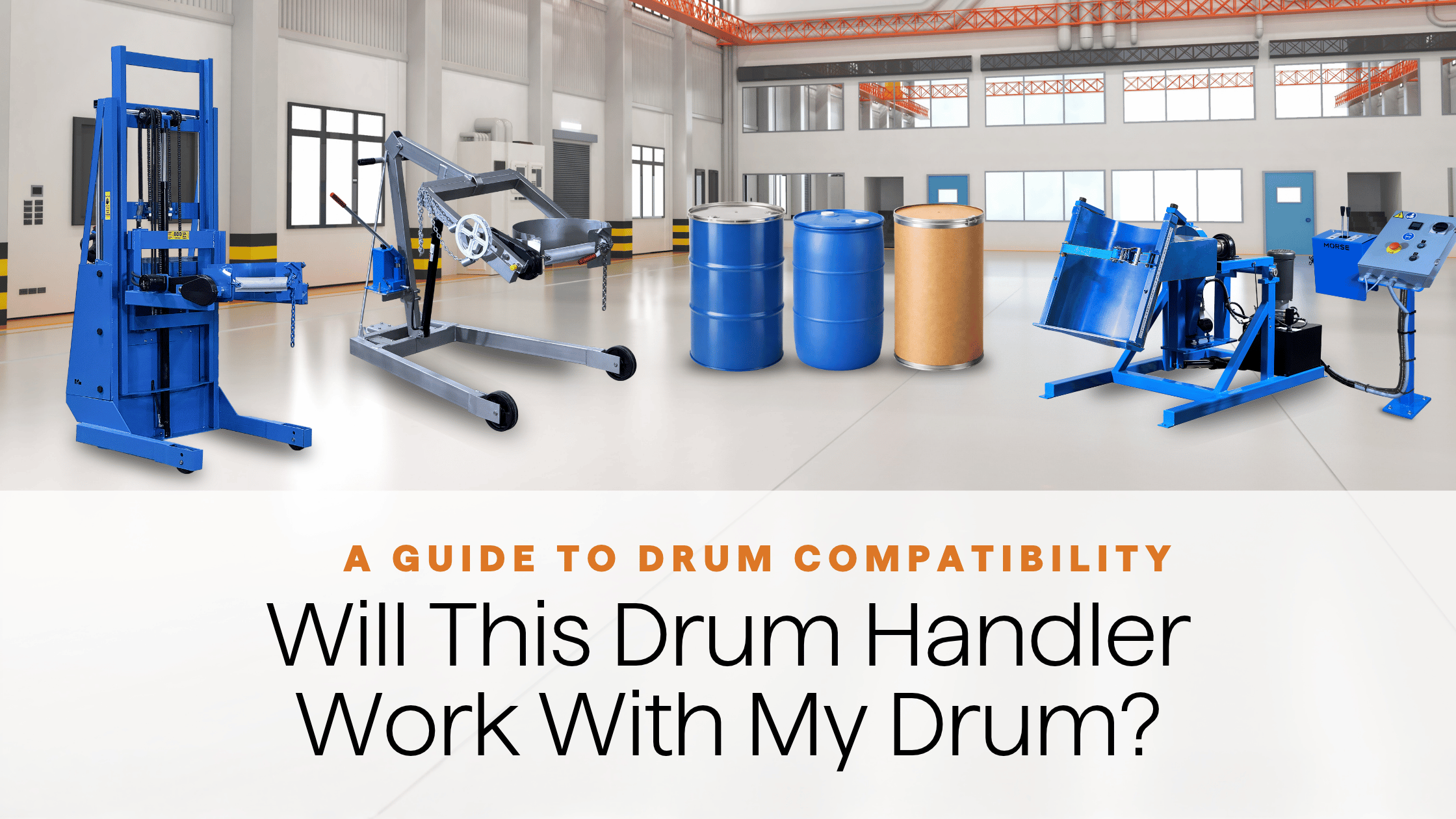
Will This Drum Handler Work With My Drum? A Guide to Drum Compatibility
Choosing drum handling equipment starts with an important question: Will the equipment actually work with your drum?
Two drums may both be described as “55-gallon drums,” but that does not necessarily mean the same drum handler will work with both. Drum material, size, construction, weight, rim configuration and condition can all affect how a drum can be safely lifted, moved or poured.
Before selecting drum handling equipment, it is important to understand both the drum and the task you need to perform.
What Information Do You Need to Choose a Drum Handler?
When evaluating drum handling equipment, start by gathering a few basic details about your drum and application:
- Drum material
- Drum capacity and dimensions
- Loaded drum weight
- Open-head or closed-head construction
- Rim or chime configuration
- Drum condition
- What you need to do with the drum
- Where the drum is located and where it needs to go
- How frequently the drum will be handled
- Any special environmental requirements
These details help determine which handling method and equipment style may be appropriate. Let’s take a closer look at why each one matters.
What Type of Drum Are You Handling?
Drums are manufactured from different materials for different applications. Three common types are steel, plastic and fiber drums.
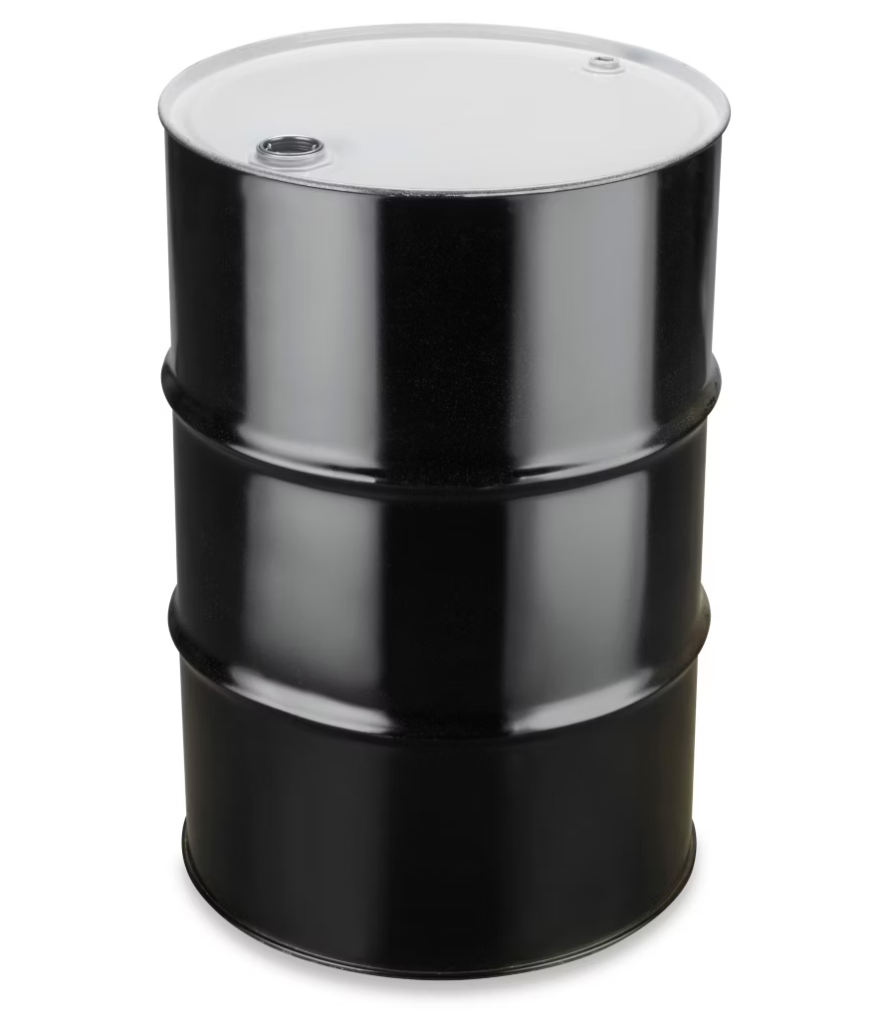
Steel Drums
Steel drums are widely used for industrial materials, chemicals, oils and other products. Depending on the equipment, a handler may secure the drum around its body or engage with its rim or chime.
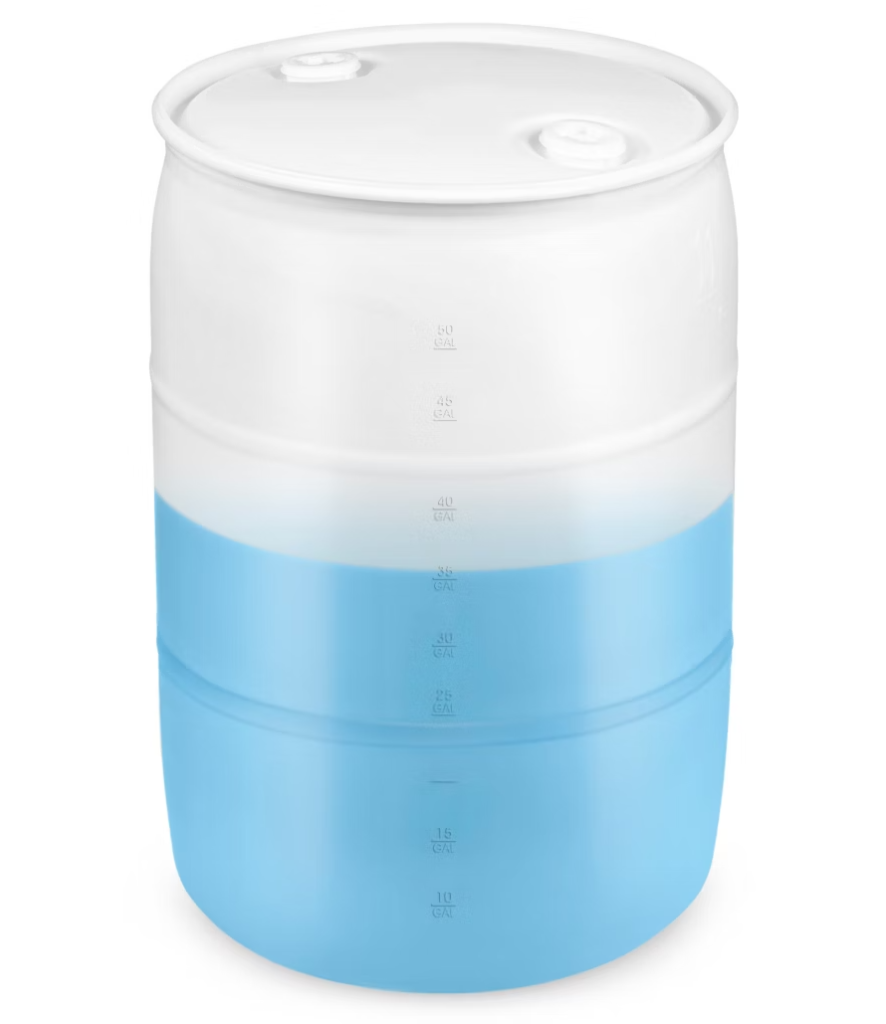
Plastic Drums
Plastic drums can differ significantly in shape and construction from steel drums. Some have pronounced rims, while others may have different profiles or features that can affect how handling equipment engages with the drum.
Do not assume that equipment designed for a steel drum is automatically compatible with a plastic drum of similar capacity.
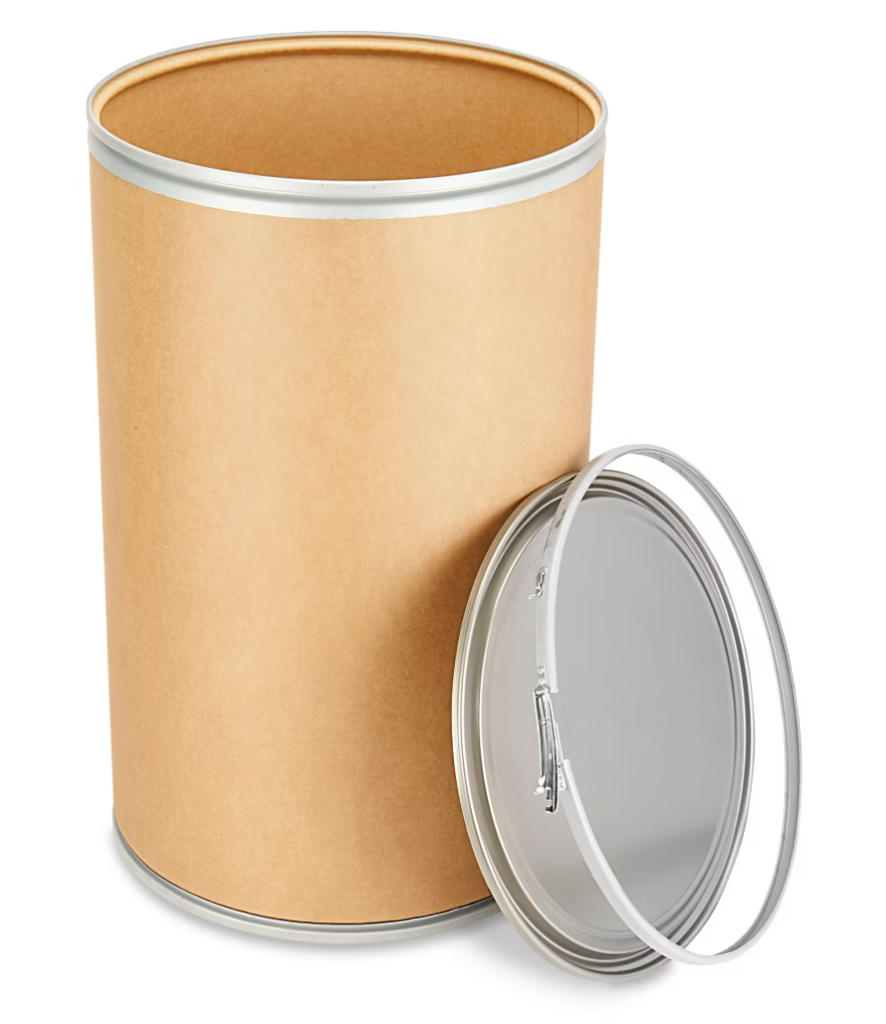
Fiber Drums
Fiber drums are commonly used for dry or solid materials. Their construction is different from steel and plastic drums, so equipment compatibility should be confirmed before handling.
The key takeaway: Drum material is one of the first specifications to identify, but material alone does not determine compatibility. Do not assume that equipment designed for a steel drum is automatically compatible with a plastic or fiber drum of similar capacity.
Does Drum Size Matter?
Yes. Drum capacity, diameter and height can all affect compatibility with drum handling equipment.
The term“55-gallon drum” does not describe every dimension or construction detail an equipment manufacturer may need to determine compatibility.
Before choosing a drum handler, confirm:
- Nominal drum capacity
- Outside diameter
- Overall height
- Drum material
- Drum construction
This becomes especially important when handling drums that fall outside conventional industrial sizes.
Does the Drum Have a Rim or Chime?
This can be an important consideration because some drum handling equipment uses the drum’s upper rim or chime as part of its gripping method. If a handler is designed to engage a specific part of the drum, differences in drum construction can affect whether the equipment can achieve the intended engagement.
That is why knowing that you have a “plastic drum” or “55-gallon drum” may not be enough. You may also need to identify how the drum is constructed and where the handler will engage it.
If you are unsure, photos and dimensional information can help an equipment specialist evaluate compatibility.
Open-Head vs. Closed-Head Drums: Does It Matter?
It can. An open-head drum typically has a removable top or cover, while a closed-head drum has a permanently attached top with smaller openings for filling or dispensing.
That difference can affect the shape and construction of the upper portion of the drum. Because some drum handlers engage with or near this area, you should confirm whether the equipment is intended for the particular drum style you are handling.
Never assume that compatibility with one drum construction automatically means compatibility with another.

How Heavy Is the Loaded Drum?
One of the most important specifications is the maximum loaded weight of the drum. Equipment capacity should be evaluated based on the weight of the drum and its contents, not simply the empty weight of the drum.
For example, two identical 55-gallon steel drums can represent very different handling applications if one contains a relatively light material and the other contains a dense liquid or solid. Always know the approximate maximum loaded drum weight and verify that it falls within the rated capacity of the equipment being considered.
What Condition Is the Drum In?
Even if a drum’s dimensions and construction are normally compatible with a specific handler, its physical condition matters.
Before handling a drum, look for conditions such as:
- Significant dents or deformation
- A damaged rim or chime
- Corrosion
- Leaks
- Loose or damaged closures
- Other structural damage
Damage can affect how handling equipment engages with or supports a drum. A damaged or compromised drum should be evaluated before attempting to lift, move or pour it.
What Do You Need to Do With the Drum?
Compatibility is not only about whether equipment can physically hold a drum. You also need equipment designed for the task you are performing. Ask what happens to the drum during your process.
Moving Drums
If the goal is simply to transport drums across the floor, a drum truck, drum dolly or mobile drum handler may be appropriate depending on the application.
Lifting Drums
If drums need to be lifted from the floor, placed onto pallets or positioned at another height, consider how the handler engages the drum, the required lift height and the available equipment in your facility.
Pouring or Dispensing
If a drum must be tilted or rotated to dispense its contents, the handler must both support the drum and provide the control necessary for the pouring operation.
Handling Drums With a Forklift
Facilities that already use forklifts may be able to use a forklift-mounted drum handler for certain applications. The drum, attachment, forklift capacity and intended task all need to be considered together.
Lifting Drums With a Crane or Hoist
Below-hook drum handlers can allow drums to be handled using existing overhead lifting equipment. The appropriate attachment depends on the drum and the operation being performed.
If you’re still determining which type of equipment your process requires, see our guide to choosing drum handling equipment by application.
Can One Drum Handler Work With Different Types of Drums?
Sometimes, but never assume that a drum handler is universal.
A particular piece of equipment may be designed to accommodate multiple drum materials or sizes, while another may have more specific compatibility requirements. The best approach is to check the manufacturer’s specifications for the specific model and compare those requirements with your drum.
If there is uncertainty, verify the application before using the equipment.
What About Stainless Steel or Spark-Resistant Drum Handling Equipment?
The environment where the equipment will be used can introduce additional requirements beyond basic drum compatibility. Certain applications may call for specialized materials or equipment configurations because of sanitation, corrosion or environmental considerations.
For example, facilities in food, pharmaceutical, chemical or other specialized industries may need to consider whether stainless steel construction is appropriate for their environment.
Applications involving potentially hazardous environments require additional evaluation. Equipment selection should be based on the specific environment, materials being handled and applicable facility safety requirements. Do not assume that a particular equipment material or option by itself makes an application safe for a hazardous location.
Drum Compatibility Checklist
Before selecting a drum handler, gather the following information:
About the drum
- What material is the drum made from?
- What is its capacity?
- What are its diameter and height?
- Is it open-head or closed-head?
- Does it have a rim or chime?
- What is its maximum loaded weight?
- Is the drum in good condition?
About the application
- Do you need to lift, move, pour, transport or position the drum?
- Where is the drum picked up?
- Where does it need to go?
- How high does it need to be lifted?
- Does it need to be tilted or poured?
- How frequently will it be handled?
- Will you use a forklift, crane or hoist?
- Are there tight spaces or other facility constraints?
- Are there environmental or sanitation requirements?

Having this information available makes it much easier to narrow down the appropriate drum handling solution.
Frequently Asked Questions About Drum Compatibility
No. A 55-gallon capacity alone does not establish compatibility. Drum material, dimensions, construction, rim configuration, loaded weight and the task being performed can all affect equipment selection.
Some drum handling equipment can accommodate more than one drum material, while other equipment is intended for specific drum types or configurations. Check the specifications for the individual handler before use.
At a minimum, identify the drum material, dimensions, capacity, construction and maximum loaded weight. You should also know what you need to do with the drum, such as lifting, moving, pouring or positioning it.
Whether a plastic drum can be handled using equipment that engages its rim depends on the drum construction and the specific handler. Confirm compatibility with both the drum and equipment manufacturer rather than assuming the rim is suitable for lifting.
Yes. Every drum handler has a rated capacity. Selection should be based on the maximum loaded drum weight, including both the drum and its contents.
Drum damage can affect how a handler engages with or supports it. Dented, corroded, leaking or otherwise compromised drums should be evaluated before handling. Follow your facility’s procedures for damaged containers and hazardous materials.
Gather as much information as possible, including measurements, drum material, loaded weight and clear photos of the drum. An equipment specialist can use those details to help evaluate compatibility.
Finding the Right Drum Handling Solution
Choosing drum handling equipment is about more than finding a product with enough capacity. The drum itself, how the equipment engages it, what you need to accomplish and the environment where it will be used all matter.
When in doubt, verify compatibility before handling the drum.
Morse Manufacturing specializes in drum handling equipment for lifting, moving, pouring and positioning drums in industrial applications. If you’re not sure which solution fits your drum, use MORi or contact Morse to start with your drum specifications and application requirements.



No responses yet