
Why Heavy-Duty Drum Handling Equipment Is Essential for Modern Warehouses
Steel, plastic, and fiber drums are common throughout manufacturing, warehousing, chemical processing, food production, and countless other industries. While drums are an efficient way to store and transport materials, they can also create significant safety and productivity challenges when handled improperly.
Many facilities still move drums using bare forklift forks, chains, straps, or improvised methods. Although these approaches may seem quick, they often increase the risk of dropped loads, damaged containers, product spills, and employee injuries.
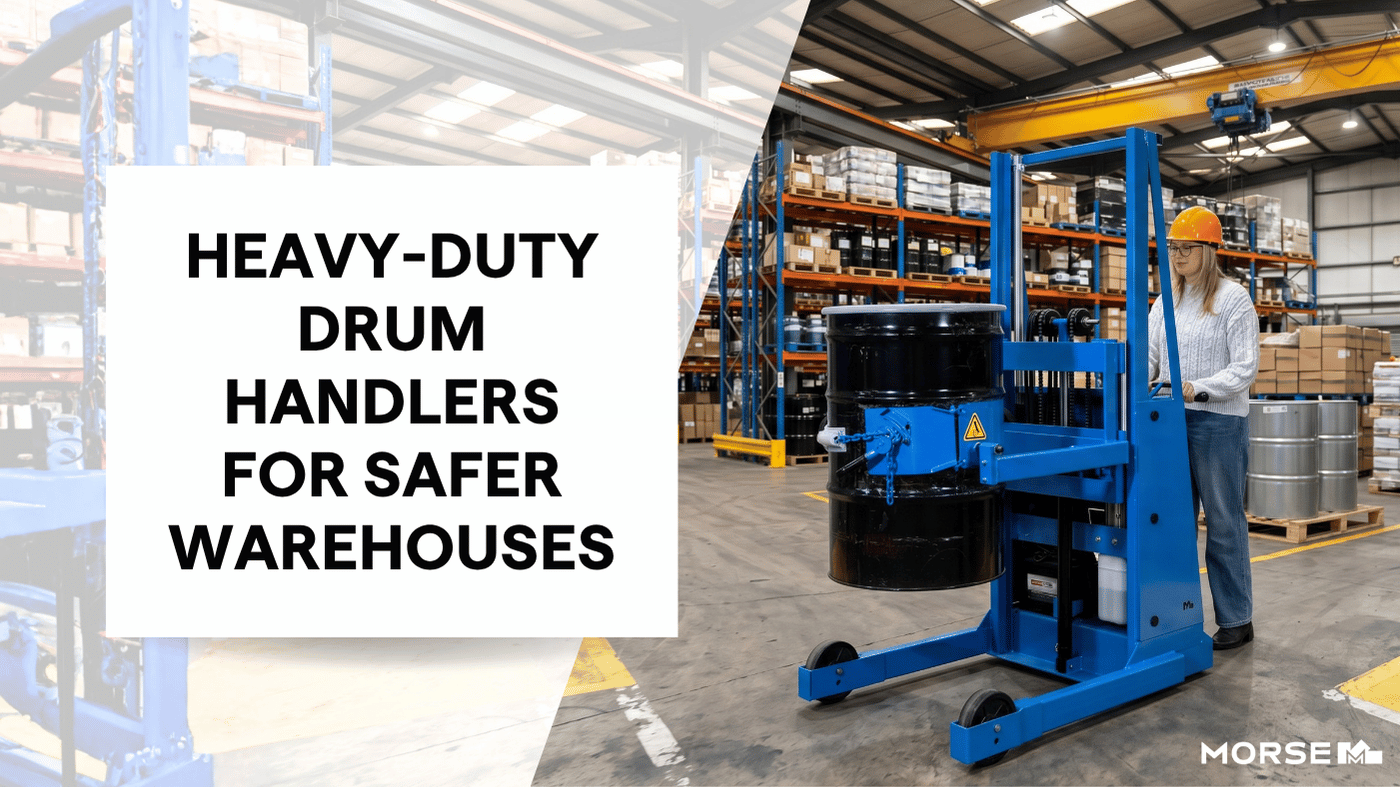
Heavy-duty drum handling equipment provides a safer, more controlled solution for lifting, moving, rotating, and dispensing drums while helping warehouses improve operational efficiency.
The Hidden Risks of Handling Drums with Bare Forks
Using a standard forklift without a dedicated drum attachment can create several warehouse safety issues:
How Heavy-Duty Drum Handling Equipment Improves Material Handling Safety
Purpose-built drum handling solutions are designed specifically for the unique challenges of moving and controlling drums.
Boosting Warehouse Productivity
While safety is often the primary concern, productivity gains can be just as significant.
Choosing the Right Drum Handling Solution
Not all drum handling equipment is designed for the same applications. When evaluating options, consider:

- Drum type (steel, plastic, or fiber)
- Drum weight
- Required lift height
- Need for rotation or dispensing
- Available forklift equipment
- Indoor or outdoor operating environment
- Frequency of drum handling tasks
Facilities that move drums regularly often find that dedicated forklift drum handlers provide one of the most efficient solutions because they combine the lifting power of a forklift with the security of purpose-built drum handling attachments.
Why Warehouse Safety Professionals Prioritize Specialized Drum Handling Equipment
Warehouse safety professionals are constantly looking for ways to reduce risk while maintaining productivity. Replacing improvised drum handling methods with heavy-duty drum handling equipment is one of the most effective ways to accomplish both goals.
A properly secured drum is less likely to be dropped, damaged, or mishandled. At the same time, operators can move, position, and dispense drums more efficiently, helping facilities achieve both safety and operational objectives.
The Bottom Line
Heavy-duty drum handling equipment helps warehouses address some of their most common material handling safety challenges while improving productivity. Compared to handling drums with bare forklift forks, dedicated drum handling solutions provide greater stability, better load control, reduced risk of injury, and more efficient workflows.
For facilities that regularly lift, move, rotate, or dispense drums, investing in purpose-built drum handling equipment can lead to safer operations, fewer incidents, and stronger overall performance.
FAQ’s
Heavy-duty drum handling equipment is designed to safely lift, move, rotate, and dispense industrial drums while reducing manual handling and improving load control.
Bare forks may not adequately secure round drums, increasing the risk of shifting loads, dropped drums, product damage, and workplace injuries.
Forklift drum handlers help operators move drums more quickly, reduce manual labor, minimize spills, and improve workflow efficiency.
Manufacturing, chemical processing, food and beverage production, pharmaceuticals, warehousing, and many other industries use drum handling equipment to safely manage drums.
Benefits include improved material handling safety, reduced warehouse safety issues, greater productivity, less product damage, and better operator control.



No responses yet